Tristia. Ex Ponto
In the melancholy elegies of the Tristia and the Ex Ponto, Ovid (43 BCE 17 CE) writes as from exile in Tomis on the Black sea, appealing to such people as his wife and the emperor.
Read Books, AudioBooks, Download Books, Ebook Pdf, Donload Ebook pdf, Audio Ebooks, Read Books Free, Free Ebooks Novel Download, AudioBooks, Download Books, Novel Ebooks, Novel Read Books, Novel Audiobooks, Romance Books, Horor Books, History Books, Advanture Books, Photography, Biography Books

In the melancholy elegies of the Tristia and the Ex Ponto, Ovid (43 BCE 17 CE) writes as from exile in Tomis on the Black sea, appealing to such people as his wife and the emperor.

Ovid (Publius Ovidius Naso, 43 BCE-17 CE), born at Sulmo, studied rhetoric and law at Rome. Later he did considerable public service there, and otherwise devoted himself to poetry and to society. Famous at first, he offended the emperor Augustus by his Ars Amatoria, and was banished because of this work and some other reason unknown to us, and dwelt in the cold and primitive town of Tomis on the Black Sea. He continued writing poetry, a kindly man, leading a temperate life. He died in exile.
Ovid's main surviving works are the Metamorphoses, a source of inspiration to artists and poets including Chaucer and Shakespeare; the Fasti, a poetic treatment of the Roman year of which Ovid finished only half; the Amores, love poems; the Ars Amatoria, not moral but clever and in parts beautiful; Heroides, fictitious love letters by legendary women to absent husbands; and the dismal works written in exile: the Tristia, appeals to persons including his wife and also the emperor; and similar Epistulae ex Ponto. Poetry came naturally to Ovid, who at his best is lively, graphic and lucid.
The Loeb Classical Library edition of Ovid is in six volumes.

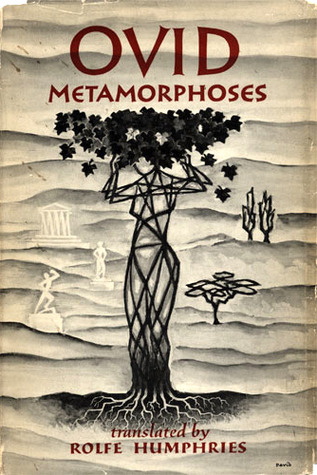
... Humphries has rendered (Ovid s) love poetry with conspicuous success into English which is neither obtrusively colloquial nor awkwardly antique. Virginia Quarterly Review

This cohesive collection of stories from Greek and Roman mythology recounts tales of recorded transformations. Comprised of over fifty stories, it chronicles the legends of King Midus, Daedalus, Icarus, Hercules, and the Trojan War, making this the definitive work of classical mythology.
THE MYTHOLOGICAL MASTERPIECE...Newly repackaged and "virtually perfect. (The New York Times Book Review)

The study of the electronic structure of materials is at a momentous stage, with the emergence of new computational methods and theoretical approaches. This volume provides an introduction to the field and describes its conceptual framework, the capabilities of present methods, limitations, and challenges for the future. Many properties of materials can now be determined directly from the fundamental equations of quantum mechanics, bringing new insights into critical problems in physics, chemistry, and materials science.

An advanced critical introduction to Greek tragedy for those who do not read Greek. Combines the best contemporary scholarly analysis of the classics with a wide knowledge of contemporary literary studies in discussing the masterpieces of Athenian drama.

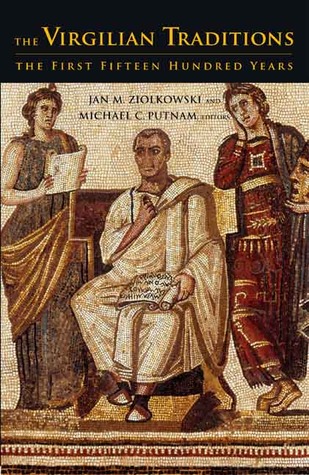
This indispensable anthology gathers texts and translations that cover major aspects of the Virgilian tradition from the Roman poet’s own lifetime to the year 1500. Unprecedented in scope, the book presents a vast compendium of materials that illuminate how poets, teachers, students, and common folk responded to Virgil and his poetry. The volume offers a brief commentary on each text, many of which are translated into English for the first time.
The book begins with a chronological survey of Virgil’s influence upon writers from Augustan Rome to Renaissance Italy. There follow detailed reviews of biographies of Virgil, of how his writings were received and used, and of how the poet was envisaged and explained through the centuries. The final section focuses on the tradition of legends associated with Virgil.

For readers, actors, students, teachers, and theatrical directors, this new translation of one of the greatest plays in the history of the western world provides the best combination of contemporary, powerful language, along with superb background and notes on meaning, interpretation, and ancient beliefs, attitudes, and contexts.

'Instant Songwriting With the Piano' shows beginning songwriters how to use the piano to create memorable melodies with step-by-step lessons, covering everything from simple warm-ups to writing lyrics and learning scales and chords, complemented by helpful diagrams and illustrations.

Who Needs Greek? is an interdisciplinary study of arguments on what ancient Greece has meant to western culture from the ancient world to today. The battles between artists and literary critics, historians and journalists, politicians and scholars, are often violent, hilarious, and always passionate. This cutting-edge cultural history ranges from ancient Greece via the Renaissance to modern opera, and treats a central question of culture in a way which will intrigue academics as well as a more general audience.

This stand alone workbook is intended for individuals with an interest in developing professional-looking websites without having to learn HTML language. Using a typical Microsoft Windows environment with cut and paste templates and examples, the book helps users learn and understand some of the benefits and limitations of commercially available software. It will be a handy reference for busy librarians who need to refresh their memories when they make additions, deletions, or add new material to their websites. It may also be used as a handout when presenting a workshop on Web design.
If your library has little, if any, technical support, and you have little, if any programming background, this stand-alone workbook will help you create a simple yet professional-looking website. Using a typical Microsoft Windows environment with cut and paste templates and examples, you will learn to understand some of the benefits and limitations of using commercially available software tools. (http: //www.redroselibrary.com/)

Welcome to the Custer Hill Club--an informal men's club set in a luxurious Adirondack hunting lodge whose members include some of America's most powerful business leaders, military men, and government officials. Ostensibly, the club is a place to gather with old friends, hunt, eat, drink, and talk off-the-record about war, life, death, sex and politics. But one Fall weekend, the Executive Board of the Custer Hill Club gathers to talk about the tragedy of 9/11 and what America must do to retaliate. Their plan is finalized and set into motion. That same weekend, a member of the Federal Anti-Terrorist Task Force is reported missing. His body is soon discovered in the woods near the Custer Hill Club's game reserve. The death appears to be a hunting accident, and that's how the local police first report it, but Detective John Corey has his doubts. As he digs deeper, he begins to unravel a plot involving the Custer Hill Club, a top-secret plan known only by its code name: Wild Fire.
From #1 New York Times bestselling author Nelson DeMille comes a suspenseful new novel featuring Detective John Corey and an all-too-plausible conspiracy to detonate a nuclear bomb in two major American cities.
Racing against the clock, Detective Corey and his wife, FBI agent Kate Mayfield, find they are the only people in a position to stop the button from being pushed and chaos from being unleashed.

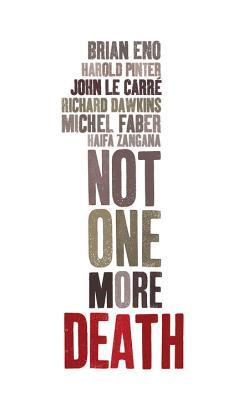
Not One More Death examines the record of US and UK troops in Iraq, questions Bush and Blair’s position under international law, and considers the responsibilities of artists, writers and the wider public in a time of war and occupation.
Published in collaboration with the Stop the War Coalition (www.stopwar.org.uk).

Dear Reader:
Get yourself ready for Mary Lisa Beverly--a soap-opera phenom who's just won her third Daytime Emmy for her role as Sunday Cavendish on Born to Be Wild. She's fun and lovable and has lots of crazy friends, most of whom hang out at her house in the Colony, the famous gated community in Malibu. Unfortunately, there is one bad thing to poleax her champagne life--someone is trying to kill her.
You'll meet Mary Lisa's family in Goddard Bay, Oregon. She's blessed with her father, cursed with her mother, and betwixt and between with her two nutzoid sisters.
And how about guys? There aren't any hotties in L.A. of interest to Mary Lisa, but in Goddard Bay--there are District Attorney John Goddard and Chief of Police Jack Wolf. And guess what? Even in the boondocks, bad stuff can happen.
Mary Lisa's best friends, Lou Lou Bollinger_and Elizabeth Fargas, become embroiled in the baffling attempts on Mary Lisa's life in L.A., with unexpected results.
I hope you laugh a lot with Born to Be Wild, root for Mary Lisa in all of her roles, and all in all, have a fine time with this book.

The lives of Catullus and Horace overlap by a dozen years in the first century BC. Yet, though they are the undisputed masters of the lyric voice in Roman poetry, Horace directly mentions his great predecessor, Catullus, only once, and this reference has often been taken as mocking. In fact, Horace's allusion, far from disparaging Catullus, pays him a discreet compliment by suggesting the challenge that his accomplishment presented to his successors, including Horace himself. In "Poetic Interplay," the first book-length study of Catullus's influence on Horace, Michael Putnam shows that the earlier poet was probably the single most important source of inspiration for Horace's "Odes," the later author's magnum opus.
Except in some half-dozen poems, Catullus is not, technically, writing lyric because his favored meters do not fall into that category. Nonetheless, however disparate their preferred genres and their stylistic usage, Horace found in the poetry of Catullus, whatever its mode of presentation, a constant stimulus for his imagination. And, despite the differences between the two poets, Putnam's close readings reveal that many of Horace's poems echo Catullus verbally, thematically, or both. By illustrating how Horace often found his own voice even as he acknowledged Catullus's genius, Putnam guides us to a deeper appreciation of the earlier poet as well.


Explore the new design discipline that is behind such products as the iPod and innovative Web sites like Flickr. While other books on this subject are either aimed at more seasoned practitioners or else are too focused on a particular medium like software, this guide will take a more holistic approach to the discipline, looking at interaction design for the Web, software, and devices. It is the only interaction design book that is coming from a designers point of view rather than that of an engineer.
This much-needed guide is more than just a how-to manual. It covers interaction design fundamentals, approaches to designing, design research, and more, and spans all mediums--Internet, software, and devices. Even robots! Filled with tips, real-world projects, and interviews, you'll get a solid grounding in everything you need to successfully tackle interaction design.
"Designing for Interaction" is an AIGA Design Press book, published under Peachpit's New Riders imprint in partnership with AIGA.

Imagine you are fluent in a magical language of prophecy, a language so powerful it can accurately describe things you cannot see or even imagine. Einstein's Heroes takes you on a journey of discovery about just such a miraculous language--the language of mathematics--one of humanity's most amazing accomplishments.
Blending science, history, and biography, this remarkable book reveals the mysteries of mathematics, focusing on the life and work of three of Albert Einstein's heroes: Isaac Newton, Michael Faraday, and especially James Clerk Maxwell, whose work directly inspired the theory of relativity. Robyn Arianrhod bridges the gap between science and literature, portraying mathematics as a language and arguing that a physical theory is a work of imagination involving the elegant and clever use of this language. The heart of the book illuminates how Maxwell, using the language of mathematics in a new and radical way, resolved the seemingly insoluble controversy between Faraday's idea of lines of force and Newton's theory of action-at-a-distance. In so doing, Maxwell not only produced the first complete mathematical description of electromagnetism, but actually predicted the existence of the radio wave, teasing it out of the mathematical language itself.
Here then is a fascinating look at mathematics: its colorful characters, its historical intrigues, and above all its role as the uncannily accurate language of nature.

Read Daniel Pinchbeck's posts on the Penguin Blog
Cross James Merrill, H. P. Lovecraft, and Carlos Castaneda -each imbued with a twenty-first-century aptitude for quantum theory and existential psychology-and you get the voice of Daniel Pinchbeck. And yet, nothing quite prepares us for the lucidity, rationale, and informed audacity of this seeker, skeptic, and cartographer of hidden realms.
Throughout the 1990s, Pinchbeck had been a member of New York's literary select. He wrote for publications such as The New York Times Magazine, Esquire, and Harper's Bazaar. His first book, Breaking Open the Head, was heralded as the most significant on psychedelic experimentation since the work of Terence McKenna.
But slowly something happened: Rather than writing from a journalistic remove, Pinchbeck-his literary powers at their peak-began to participate in the shamanic and metaphysical belief systems he was encountering. As his psyche and body opened to new experience, disparate threads and occurrences made sense like never before: Humanity, every sign pointed, is precariously balanced between greater self-potential and environmental disaster. The Mayan calendar's "end date" of 2012 seems to define our present age: It heralds the end of one way of existence and the return of another, in which the serpent god Quetzalcoatl reigns anew, bringing with him an unimaginably ancient-yet, to us, wholly new-way of living.
A result not just of study but also of participation, 2012 tells the tale of a single man in whose trials we ultimately recognize our own hopes and anxieties about modern life.

From the bestselling author of The Psychopath Test: A Journey Through the Madness Industry and So You've Been Publicly Shamed.
In 1979 a secret unit was established by the most gifted minds within the U.S. Army. Defying all known accepted military practice -- and indeed, the laws of physics -- they believed that a soldier could adopt a cloak of invisibility, pass cleanly through walls, and, perhaps most chillingly, kill goats just by staring at them.
Entrusted with defending America from all known adversaries, they were the First Earth Battalion. And they really weren't joking. What's more, they're back and fighting the War on Terror.
With firsthand access to the leading players in the story, Ronson traces the evolution of these bizarre activities over the past three decades and shows how they are alive today within the U.S. Department of Homeland Security and in postwar Iraq. Why are they blasting Iraqi prisoners of war with the theme tune to Barney the Purple Dinosaur? Why have 100 debleated goats been secretly placed inside the Special Forces Command Center at Fort Bragg, North Carolina? How was the U.S. military associated with the mysterious mass suicide of a strange cult from San Diego? The Men Who Stare at Goats answers these and many more questions.